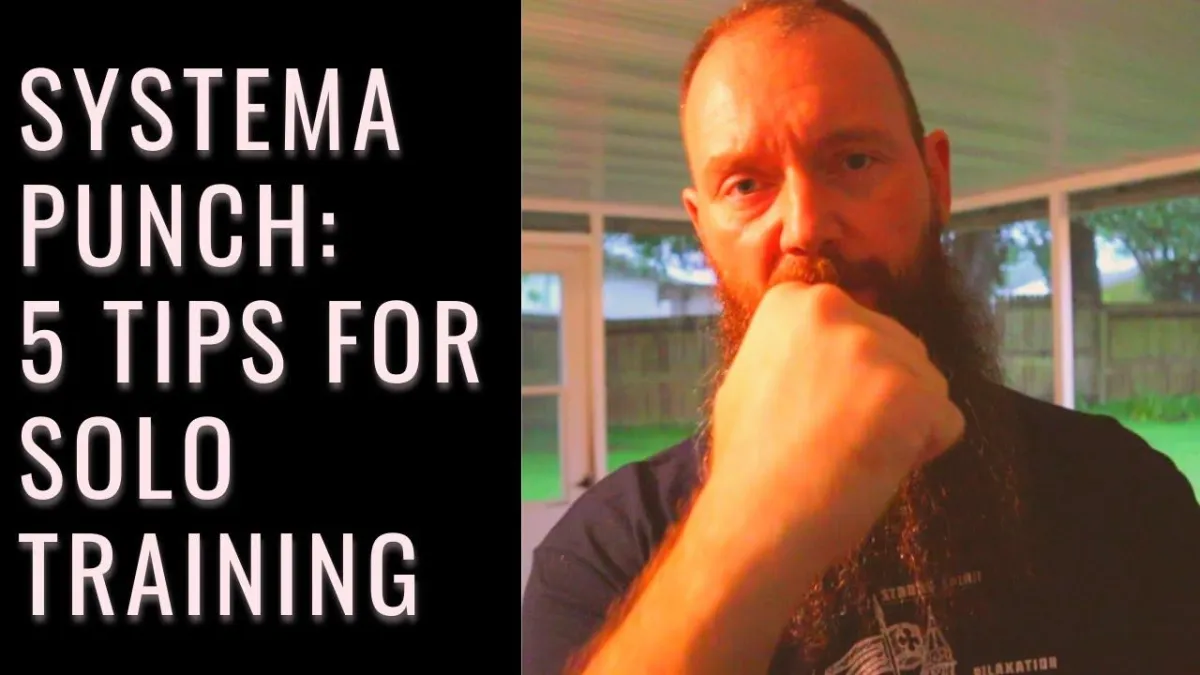
How to Develop Your Fist for Systema Punching (Solo Training Guide)
How to Develop Your Fist for Systema Punching (Solo Training Guide)
Most people assume you need a training partner — or at least a heavy bag — to build real punching power. Not true. Some of the most foundational work in Systema can be done completely on your own, and your fist development is no exception.
In this guide, we're covering five essential solo drills to strengthen and properly form your fist for Systema punching, plus two bonus exercises at the end specifically designed to build speed and power.
What Makes the Systema Punch Different?
Systema places a heavy emphasis on whole-body mechanics, breath, and relaxation. The goal isn't a tense, white-knuckled strike — it's a precise, efficient hit where tension lives only where it needs to, and nowhere else. That philosophy shapes every drill in this guide.
Tip #1: The Roll-Up — Learning to Form Your Fist Properly
The foundation of everything is forming the fist correctly, and Systema uses a deliberate method called the roll-up.
Here's how to do it:
Open your hand completely, fingers spread.
Roll the fingers in tightly, knuckle by knuckle, with deliberate tension. The fingertips should land at the top of your palm.
Lay the thumb across the inside of the fingers (never tucked behind them).
Think about expansion — imagine the fist pushing outward in all directions: front, back, sides, up, and down.
Move the wrist around while holding the fist. This helps you learn to relax the forearm while keeping the fist tight. The tension should stop at the wrist — your forearm, upper arm, and shoulder should be relaxed.
Once you have that feeling of fullness and solidity, open the hand and release. Then close the fist again — but this time without squeezing it into position. The goal is to reproduce that same tight, full feeling naturally, from muscle memory alone.
Key principle: Tension in the fist. Relaxation everywhere else.
Tip #2: Forearm Massage
This one is simple but easy to skip — don't.
Since Systema punching requires that tension stays below the wrist, the forearm needs to stay loose and healthy. A tight, chronically tense forearm will sabotage your technique.
Daily forearm massage:
Grip your forearm and squeeze up and down along the length.
Rotate the grip as you go to work the tissue from all angles.
Identify tender spots and work them with your fingertips.
This takes only a few minutes and pays dividends in both recovery and performance.
Tip #3: Slow Push-Ups for Fist, Wrist, and Forearm Strength
Push-ups are a cornerstone of Systema conditioning — but speed matters here. Slow push-ups are the goal.
Slow, controlled movement places stress on connective tissue and tendons, which is exactly where functional strength in striking comes from. You can do these:
On the floor — on your fists in proper position
Against the wall — a great starting point; form your fist correctly, press your knuckles to the wall, and slowly push away and return
Two focal points to practice:
From the wrist/knuckles — feel the push originate from the end of your forearm through your knuckles
From the scapula — visualize the movement beginning at the shoulder blade; this develops full-body connection in your strike
Start slow. There's no rush. The benefit is in the control, not the speed.
Tip #4: Bent-Arm Palm Strikes
This drill addresses a common problem: energy rebounding back into your body after a strike.
Hold your arm at roughly a 90-degree bend — from elbow tip to wrist to knuckles, you should have a flat, straight line. Now strike your opposing palm with your fist, or use your palm to hit the fist.
What you're checking for: Does any vibration travel up into your shoulder? If yes, there's unnecessary tension being absorbed by your body instead of released through the target.
Why the bent arm helps: When two forces meet at your fist, the energy line travels down the forearm and exits through the elbow — it cannot make that 90-degree turn up into your shoulder and neck. A straight punch, while effective, is more susceptible to returning force if the mechanics aren't right.
Practice this drill until strikes feel clean — energy out, nothing back.
Tip #5: Wall Distancing Drill
Knowing where to hit is just as important as how to hit. This drill uses the wall to teach you your ideal striking distance.
How to practice:
Stand in front of the wall and reach out — touch it with a slight bend remaining in the elbow. That's your sweet spot.
Relax. Then throw a relaxed strike to that same point.
Once comfortable, walk toward the wall and deliver the strike as you arrive at the right distance — no stopping to measure.
Important: This is not a knuckle-conditioning drill. The wall is simply a stable, honest target that will immediately tell you if you're arriving with too much tension — because you'll feel it. Work this from different angles: facing the wall, turned slightly, even with your non-dominant hand.
Bonus #1: One-Arm Explosive Wall Press
Now we build power.
Find your wall distancing position from Tip #5 — then go one-armed. Press the wall away from you, using either the wrist-to-knuckle focal point or the scapula focal point. Once you're comfortable, add explosion — drive the wall away forcefully enough to push your body back. This trains the fast-twitch component of the striking movement while reinforcing proper form.
A door jamb or wall edge works even better here, as it allows your body to travel deeper before contact.
Bonus #2: Explosive Kneeling Push-Ups
This is the final piece — raw explosive power, grounded in body mechanics.
Setup: Get into a push-up position on your fists, but with your knees on the floor.
The drill:
Lower yourself to the ground slowly to feel the position.
Drive the floor away from you as powerfully as you can — the goal is to come all the way up into a tall kneeling position, fists leaving the ground.
As you descend back down, practice softly catching yourself — distributing the falling energy throughout the body rather than bracing hard.
That final catch is itself a Systema skill: learning to receive and redirect force, whether it comes from a fall or a strike.
Putting It Together
You don't need an elaborate gym setup or a sparring partner to make serious progress. Here's a simple solo session using everything above:
DrillSets/DurationRoll-Up Practice2–3 minutesForearm Massage2–3 minutesSlow Wall Push-Ups3 sets, very slow repsBent-Arm Palm Strikes2–3 minutes each sideWall Distancing Practice5–10 strikes, varied anglesOne-Arm Explosive Press3–5 reps each armExplosive Kneeling Push-Ups3–5 reps
Final Thoughts
The Systema approach to punching isn't about brute force — it's about structure, relaxation, and efficient delivery of energy. These solo drills build exactly that, one layer at a time.
Whether you're a beginner learning to form your first proper fist or an experienced practitioner refining your mechanics, consistent solo training with these tools will make a measurable difference.
Use this in good health — and if you have questions or want to see any of these drills explained a different way, drop a comment below.
Want to go deeper into Systema training? Subscribe to our YouTube channel for more solo and partner drills, and share this article with a training partner who could use it.